CTGO:CA:
CTGO:
SILVER:
GOLD:
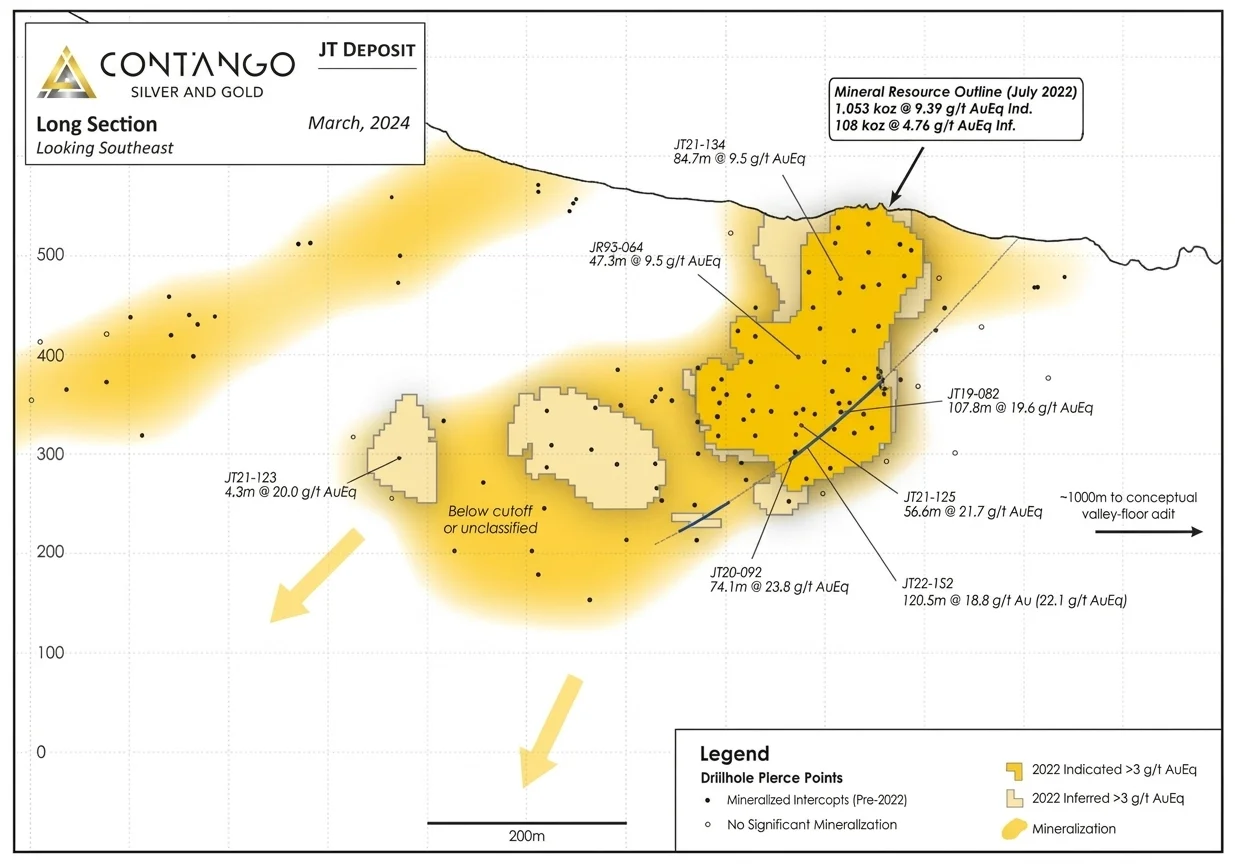
The JT Deposit hosts an Indicated Resource of 1,053,000 ounces gold equivalent at 9.39 g/t AuEq, plus an Inferred Resource of 108,000 ounces at 4.76 g/t AuEq.
Exceptional grade paired with outstanding metallurgy: gold recovery above 97% and base metal recoveries of 80% to 90% into clean concentrates.
Located 125 miles southwest of Anchorage, with a planned ~20 mi road from the portal site to a barge landing on the coast, a natural fit for Contango’s Direct Ship Ore model.
Held 100% under a lease with Cook Inlet Regional Inc. (CIRI). Johnson Tract is a FAST-41 covered project, with baseline studies, permitting, and pre-development design work in progress.
Overview
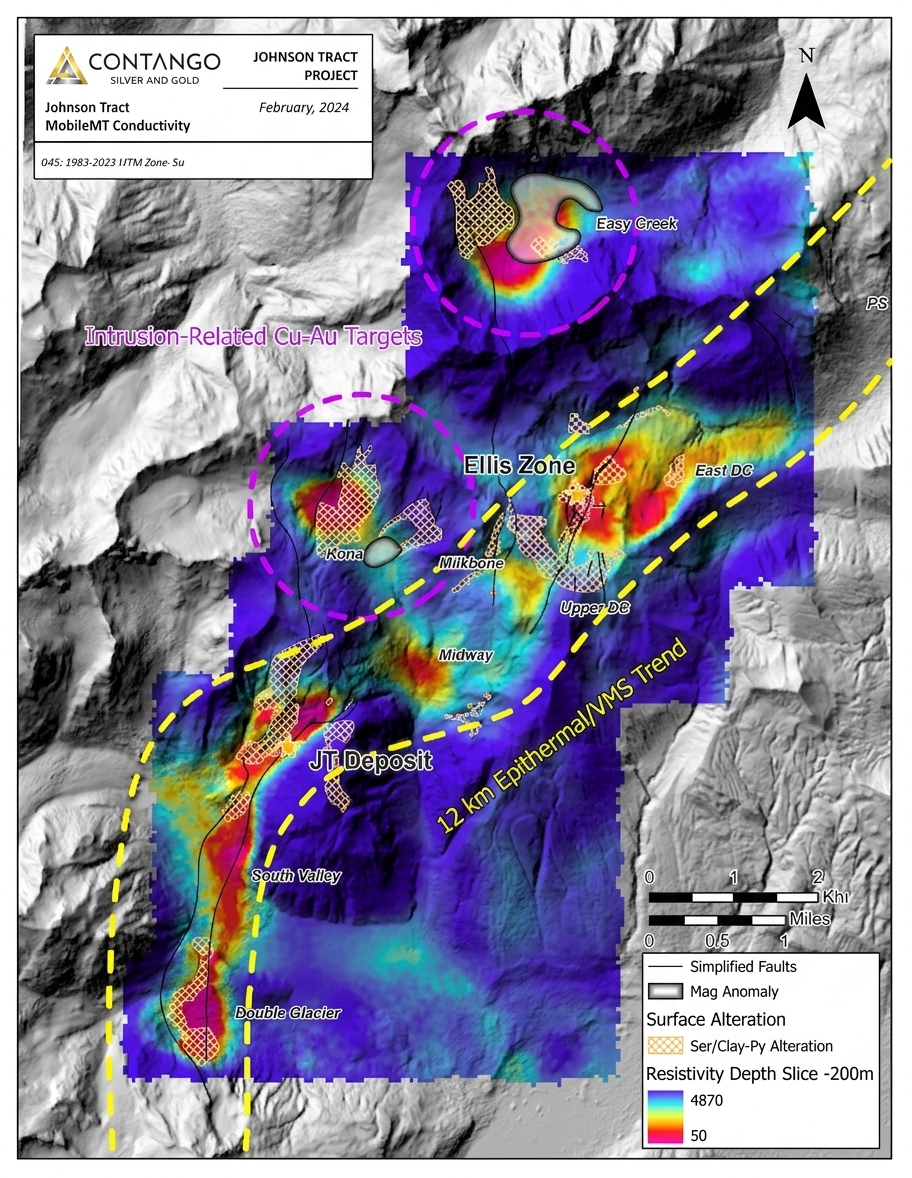
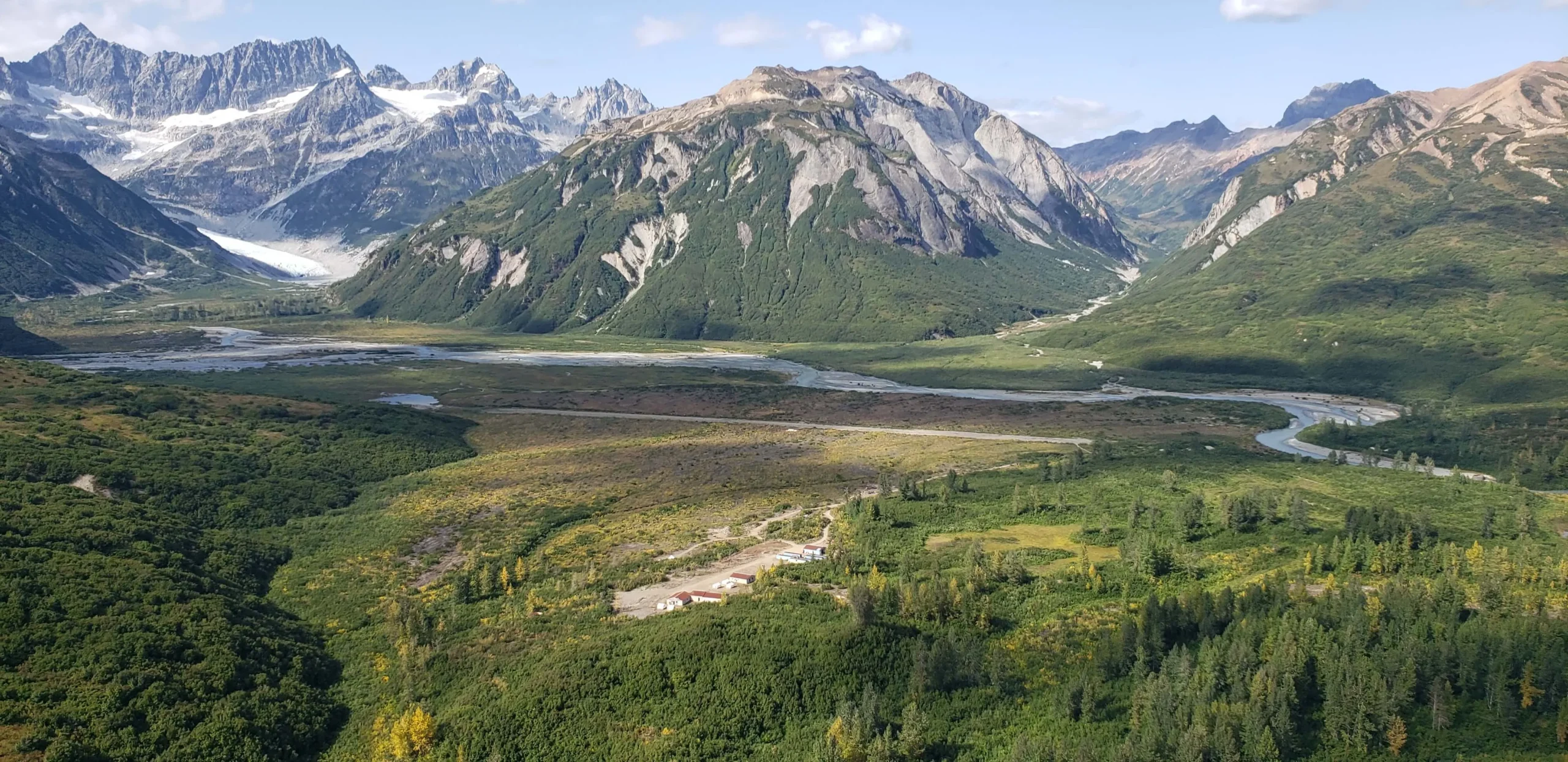
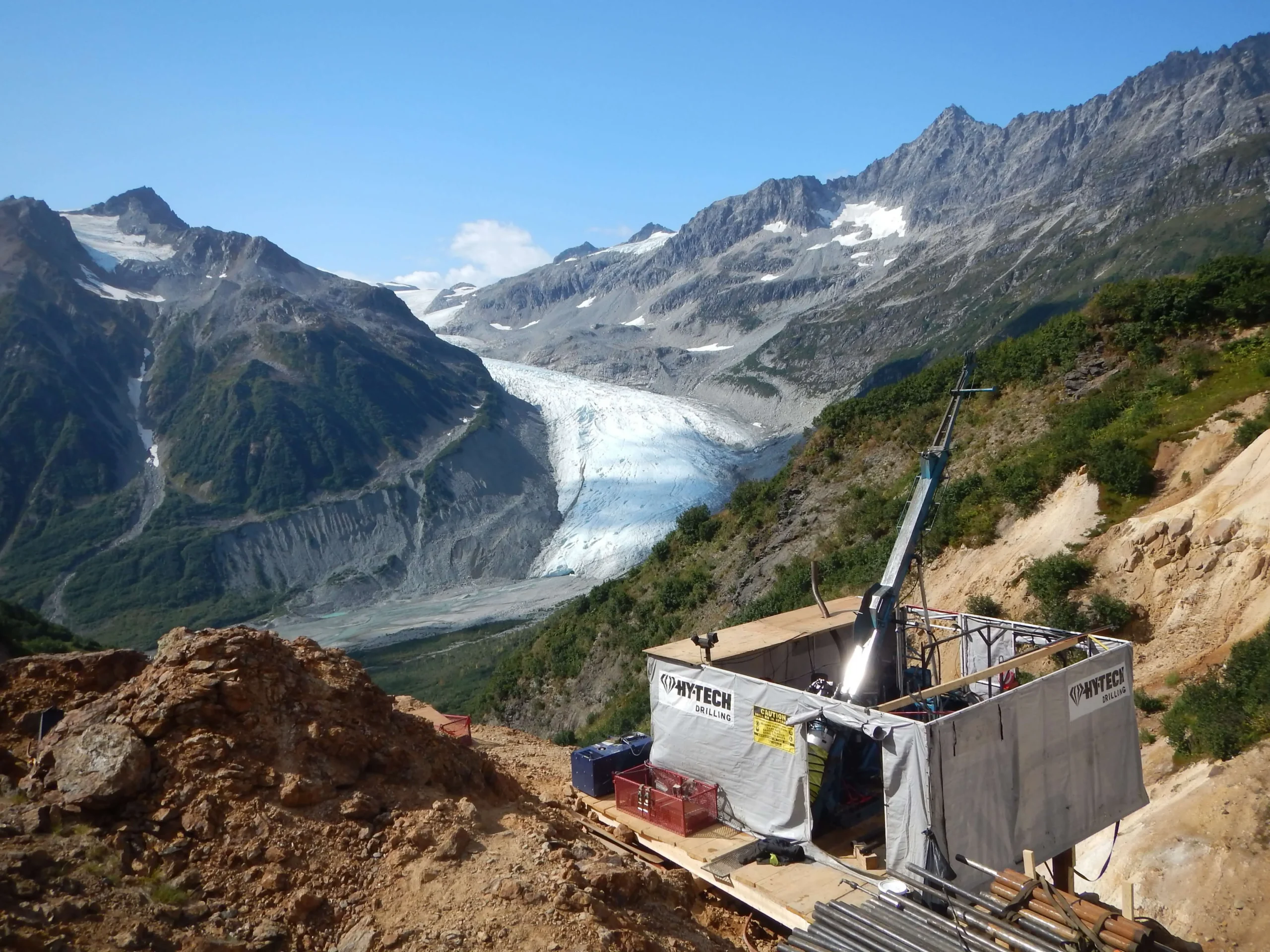
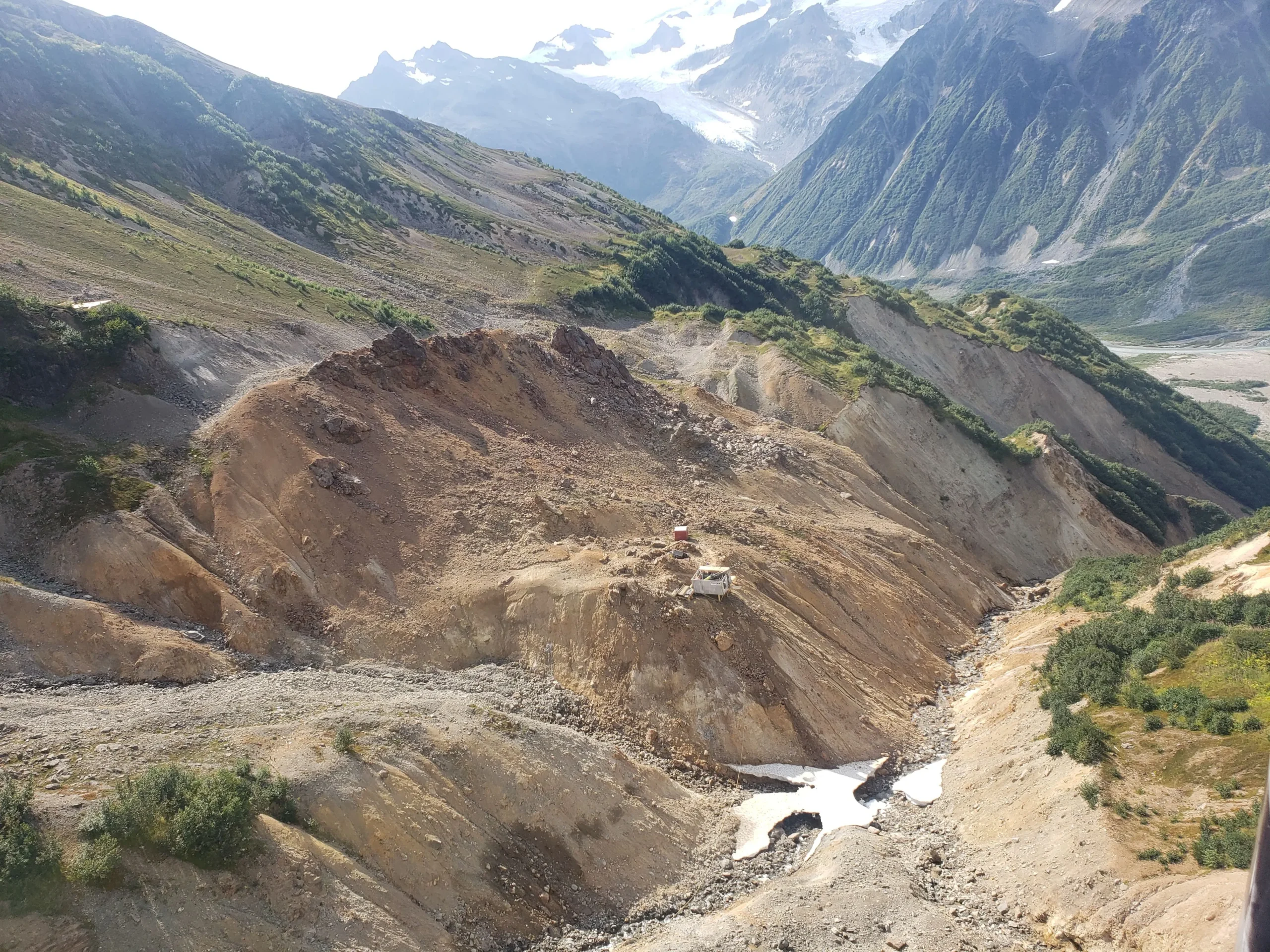
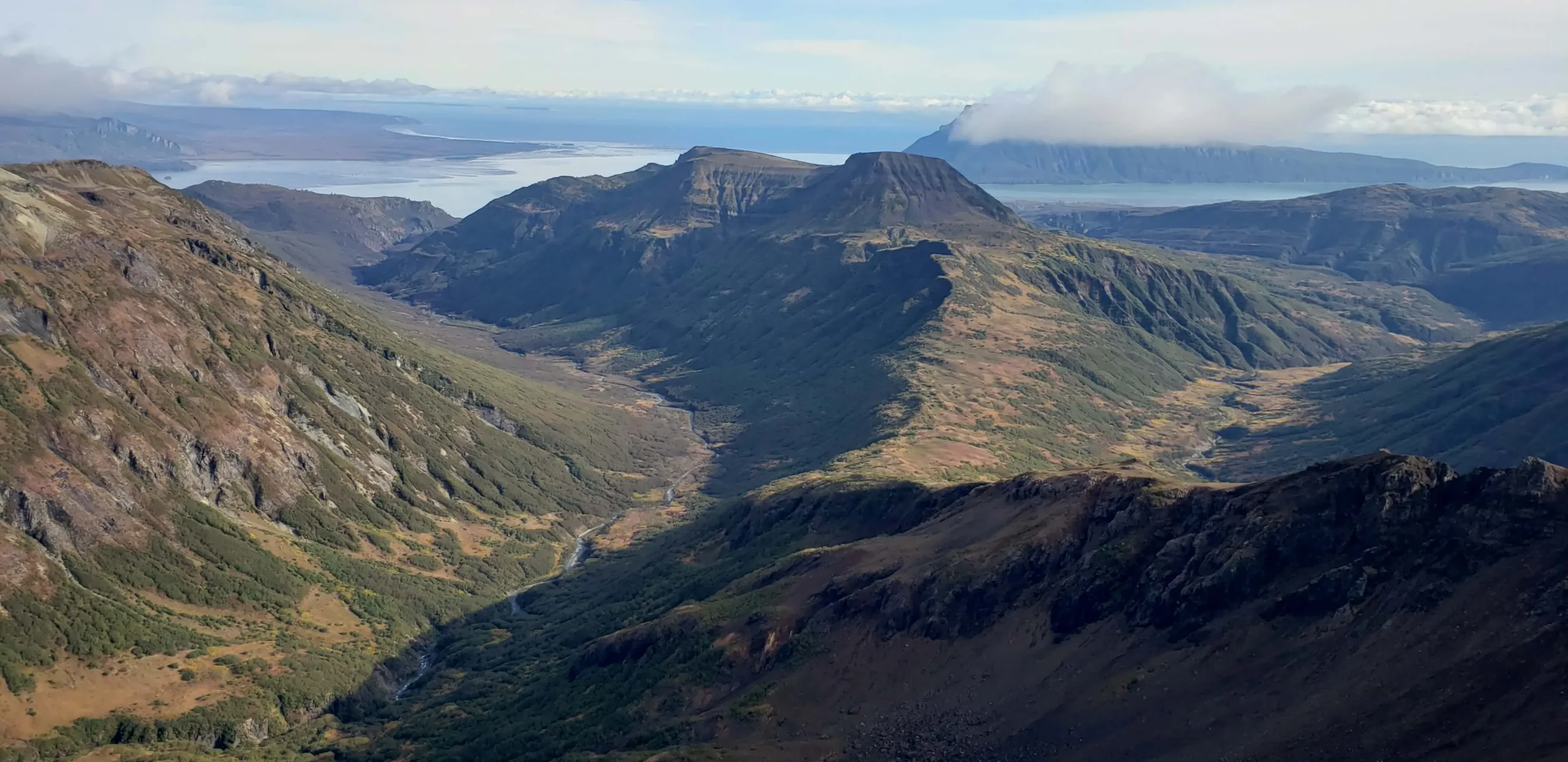
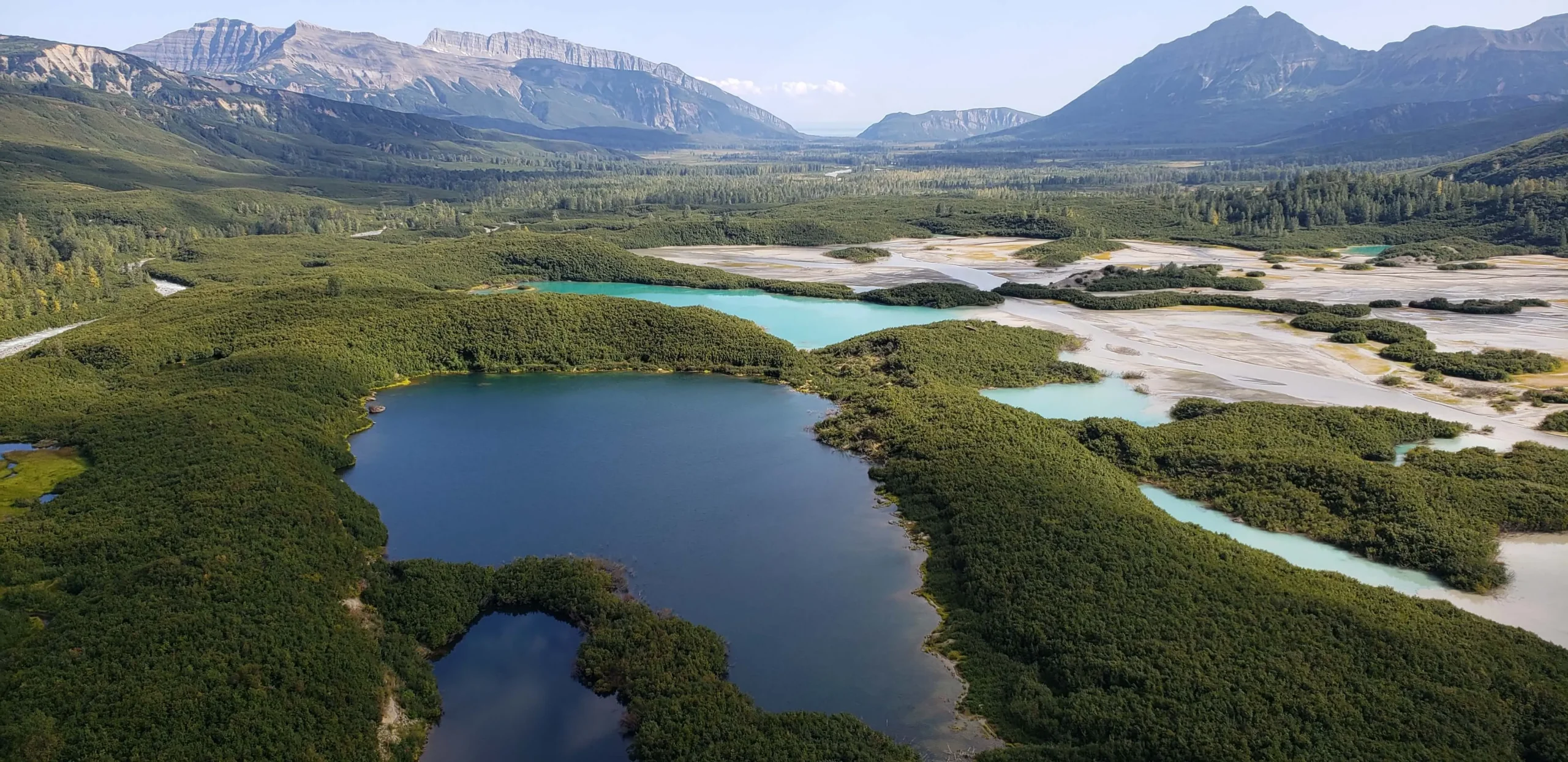
Johnson Tract is a polymetallic project rich in gold, zinc, copper, silver, and lead, located approximately 20 miles from tidewater and 125 miles (200 kilometers) southwest of Anchorage. The 21,000-acre property hosts the high-grade JT Critical Metals Deposit, the Ellis Zone, and at least nine additional mineral prospects along a 12-kilometer strike length.
Contango acquired the project through its July 2024 acquisition of HighGold Mining, which had held Johnson Tract under a lease agreement with Cook Inlet Region, Inc. (CIRI), one of 12 land-based Alaska Native regional corporations created by the Alaska Native Claims Settlement Act of 1971. CIRI is owned by more than 9,100 shareholders, primarily of Alaska Native descent.
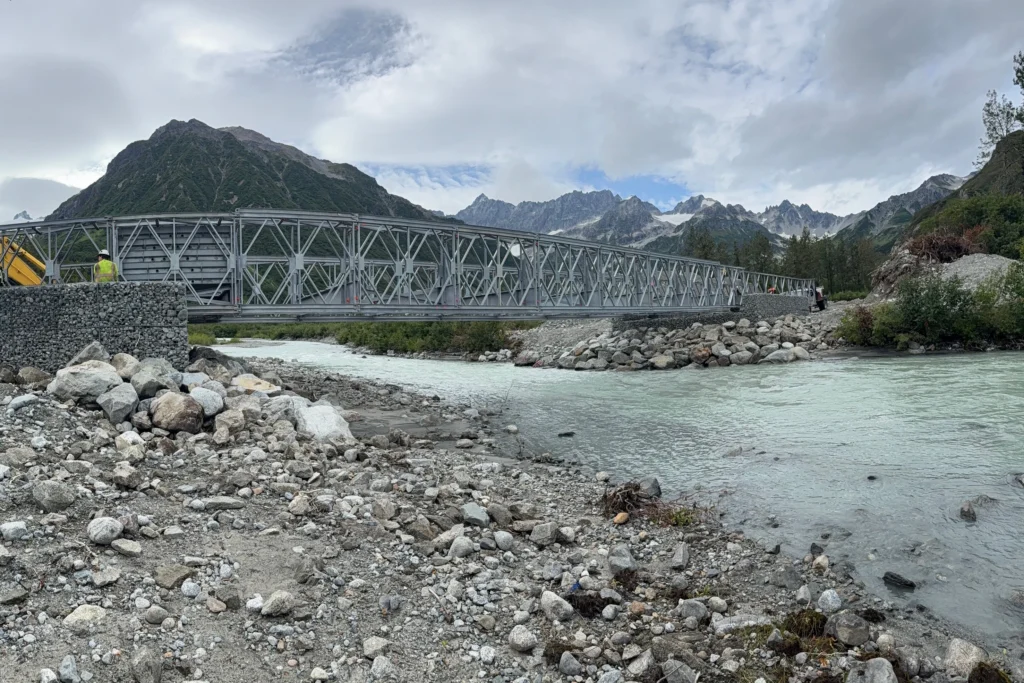
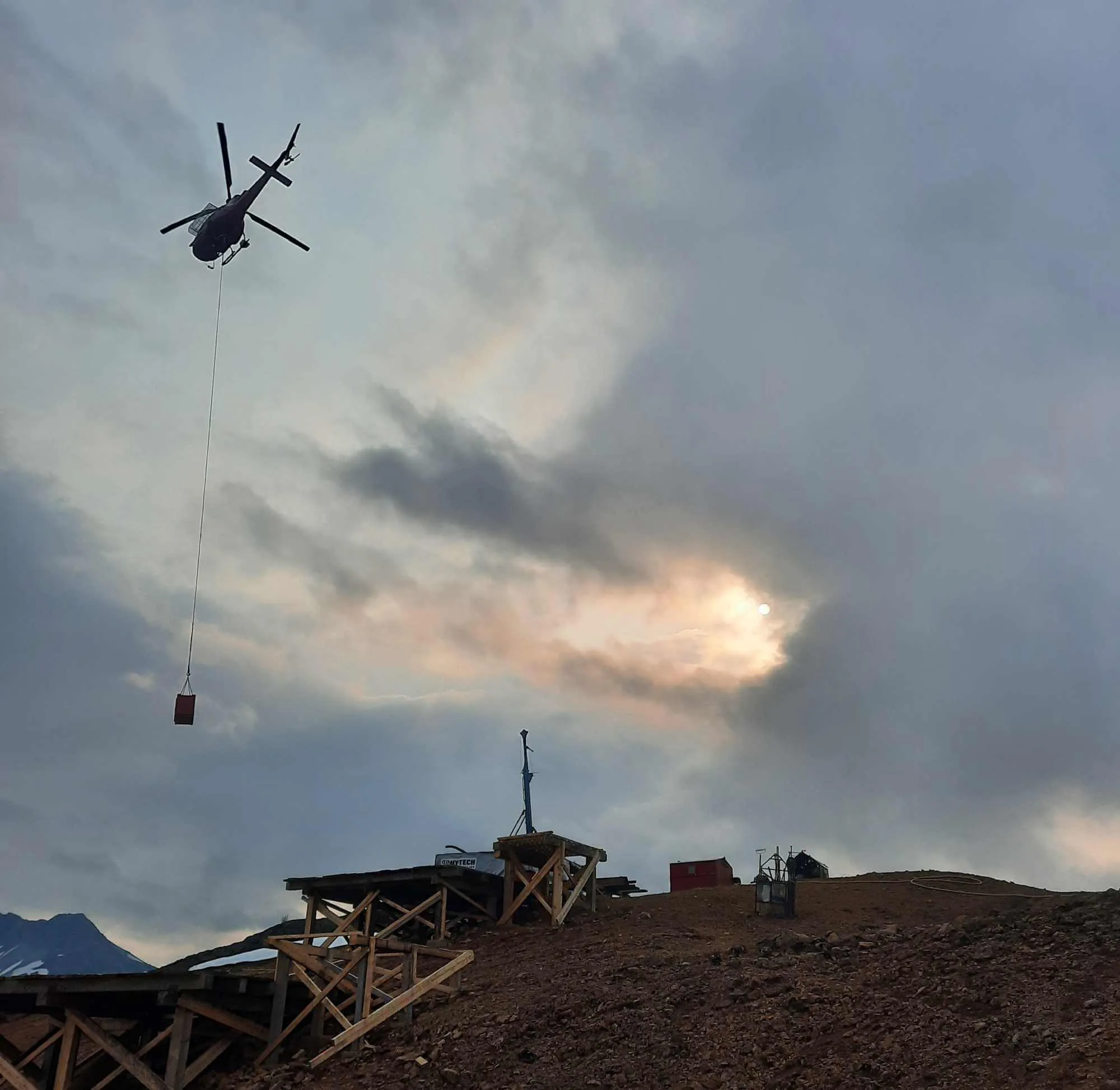
The project fits the Contango Direct Ship Ore (DSO) model. Its position close to tidewater creates a unique opportunity to barge mined ore to an existing processing facility rather than building a mill on site. Contango is advancing the elements that will enable eventual mining at the JT Deposit, including building a road from the existing camp to the proposed portal location, permitting for an underground access ramp to expand and upgrade the resource, and a road to a barge landing at the coast, while assessing opportunities for near-term production.
Read the announcement of the Johnson Tract SK-1300 Initial Assessment and the latest project updates in the News section.
Key Project Metrics
Tenure
The Johnson Tract lease is held with Cook Inlet Regional, Inc. (CIRI). CIRI selected the Johnson Tract lands through the Alaska Native Claims Settlement Act and, in addition to mineral and surface rights, was granted port and transportation easements across adjoining parkland specifically to support mineral extraction.
The lease has an Initial Term of 10 years, followed by a 5-year Development Term to reach a mine construction decision, and then a Production Term that continues for as long as operations and commercial production are maintained. Minimum exploration expenditures and annual lease payments maintain the lease until production. CIRI retains certain NSR royalty rights and a back-in right for up to a 25% participating interest.
Regional Location Map
Geology & Mineralization
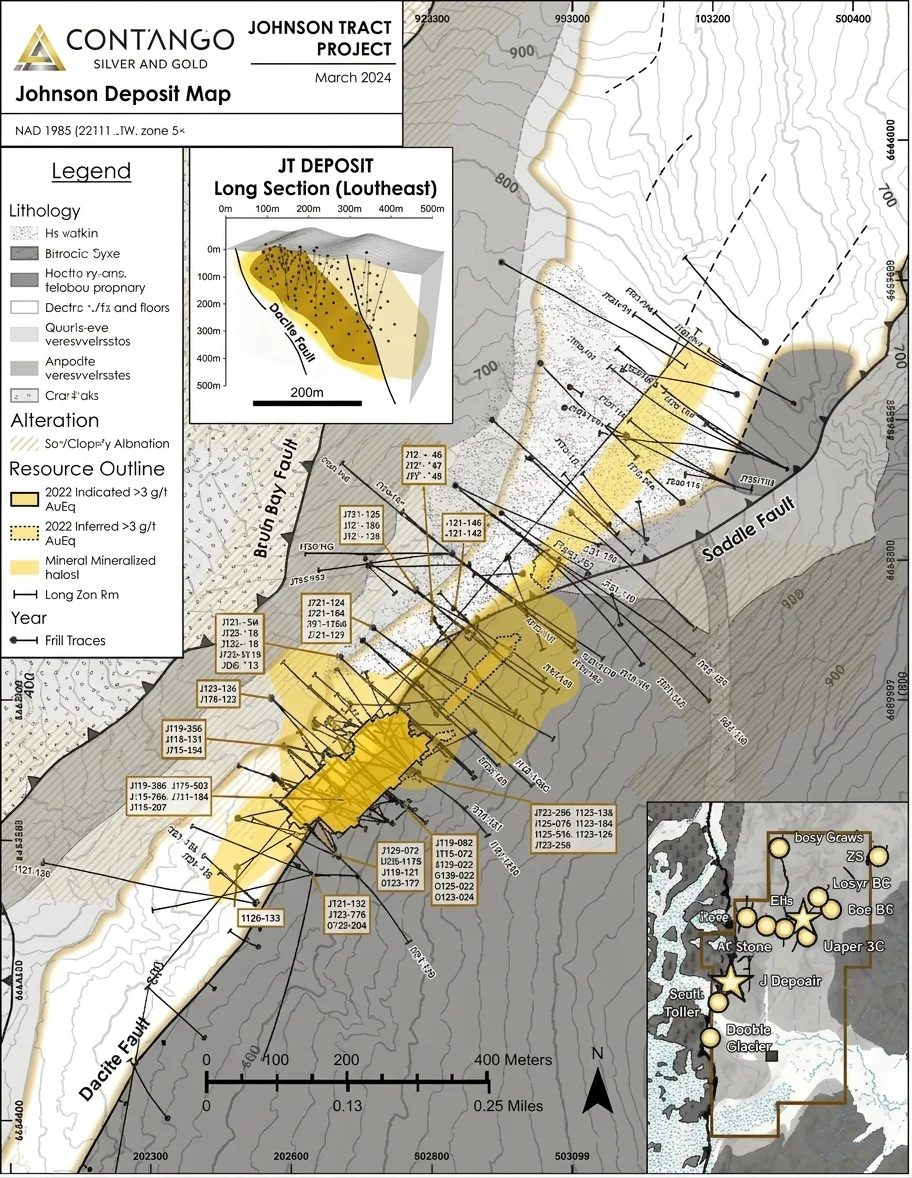
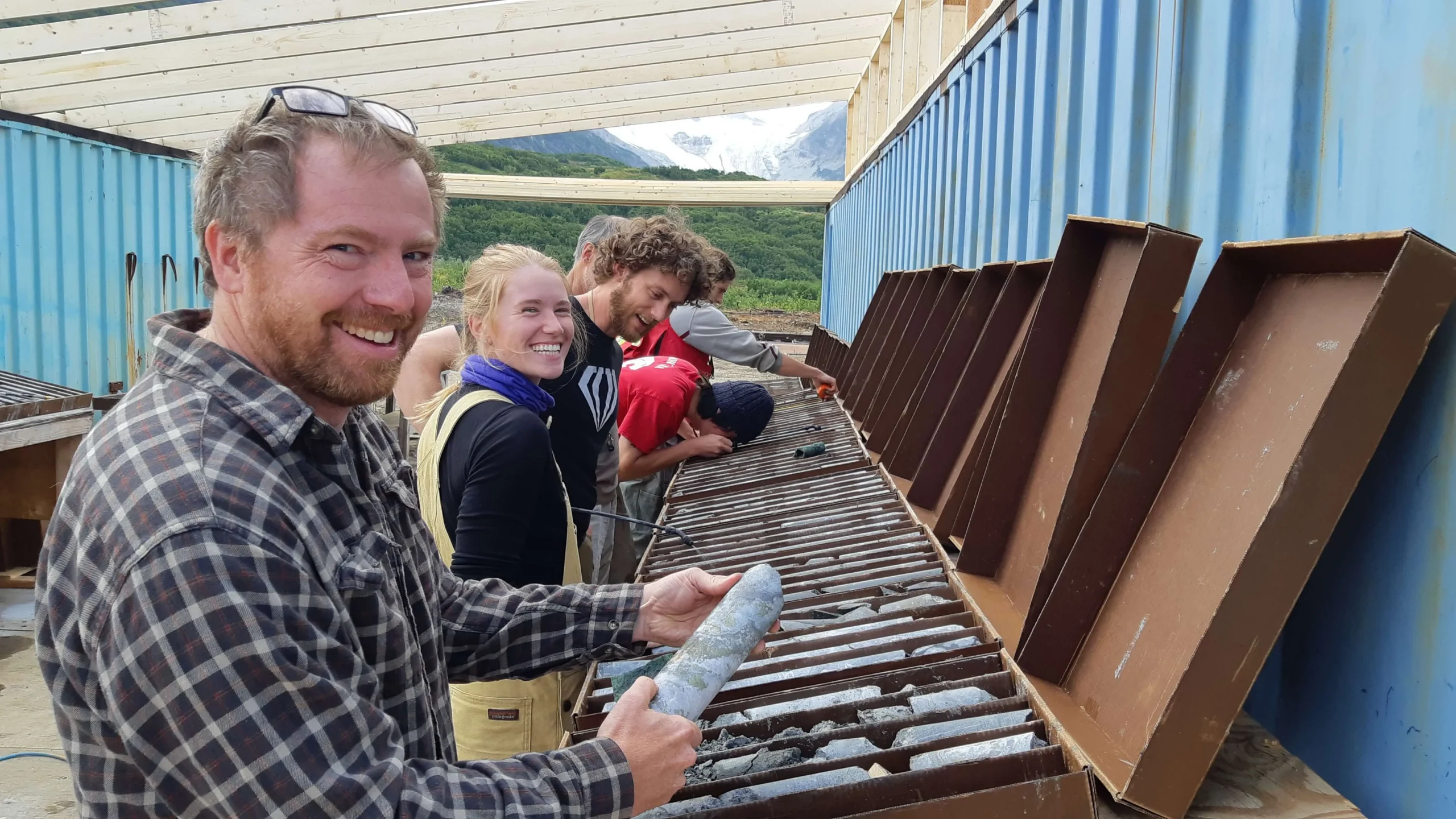
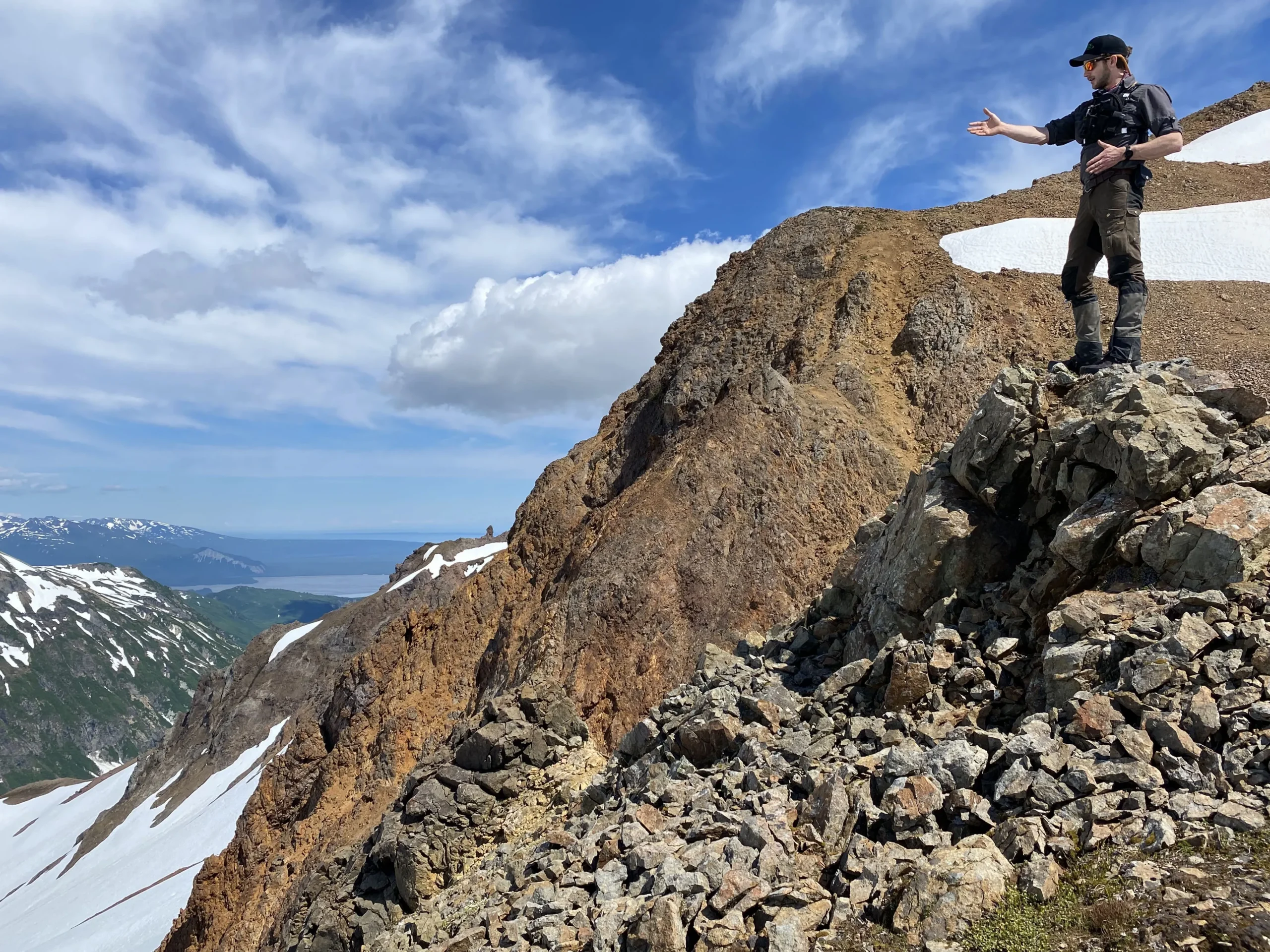
The JT Deposit is interpreted as an intermediate sulfidation epithermal deposit. Mineralization forms a tabular silicified body containing a stockwork of quartz-sulphide veins and breccia, surrounded by a zone of anhydrite-chlorite alteration grading outward to pyrite-sericite alteration. Drilling has defined mineralization from surface to a vertical depth of approximately 350 meters, over a strike length of more than 600 meters, and to a maximum true width of 60 meters.
The high-grade Indicated Resource forms an average 40-meter-thick, sub-vertical tabular structure highly amenable to low-cost, bottom-up bulk underground mining. This exceptional width is roughly ten times that of high-grade peers above 5 g/t AuEq. The deposit is truncated to the southeast by the Dacite Fault, and the offset portion of the deposit remains a priority exploration target.
Mineral Resource Estimate. JT Deposit Mineral Resource at a 3.0 g/t AuEq cut-off (effective date July 12, 2022):
Category | Tonnes (000s) | Au (g/t) | Ag (g/t) | Cu (%) | Pb (%) | Zn (%) | AuEq (g/t) |
Indicated | 3,489 | 5.33 | 6.0 | 0.56 | 0.67 | 5.21 | 9.39 |
Inferred | 706 | 1.36 | 9.1 | 0.59 | 0.30 | 4.18 | 4.76 |
Contained metal:
Category | Au (koz) | Ag (koz) | Cu (M lb) | Pb (M lb) | Zn (M lb) | AuEq (koz) |
Indicated | 598 | 673 | 43.1 | 51.5 | 400.8 | 1,053 |
Inferred | 31 | 207 | 9.2 | 4.7 | 65.1 | 108 |
Notes: (1) Includes all drill holes completed at the JT Deposit through October 2021. (2) Assumed metal prices: US$1,650/oz Au, US$20/oz Ag, US$3.50/lb Cu, US$1.00/lb Pb, US$1.50/lb Zn. (3) AuEq is based on assumed metal prices and estimated metallurgical recoveries of 97% Au, 85% Ag, 85% Cu, 72% Pb, and 92% Zn from 2022 test work. (4) AuEq = Au g/t + Ag g/t x 0.01 + Cu% x 1.27 + Pb% x 0.31 + Zn% x 0.59. (5) Average bulk density of 2.84. (6) Assay capping applied to restrict high-grade outliers. (7) The economic underground cut-off is estimated at 2.5 g/t AuEq; the resource is reported at a more conservative 3.0 g/t AuEq given the deposit’s high grade. (8) Preliminary underground constraints applied to satisfy reasonable prospects of eventual extraction. (9) Resources are reported undiluted, with tonnages rounded. (10) Mineral resources that are not mineral reserves do not have demonstrated economic viability.
Metallurgy. Locked cycle flotation tests yielded high-quality copper, zinc, lead, and gold concentrates at a coarse primary grind of 125 microns, with very good recoveries, low impurities, and negligible penalty elements: 97.2% combined payable gold recovery, 92.3% zinc recovery to a 52.6% zinc concentrate, 84.5% copper recovery to a 30.6% copper concentrate, 72.4% lead recovery to a 62.1% lead concentrate, and a gold pyrite concentrate grading 64.3 g/t gold.
Significant JT Deposit drill intersections:
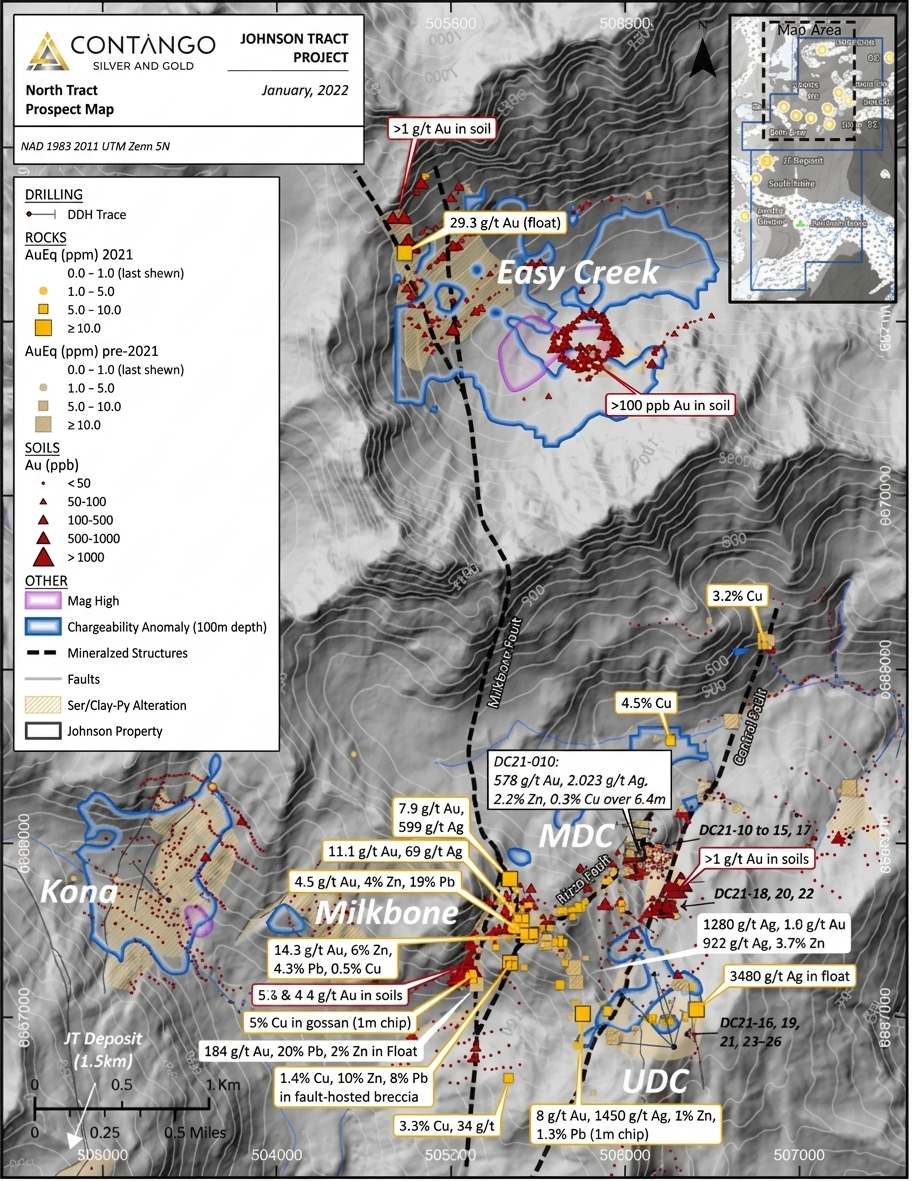
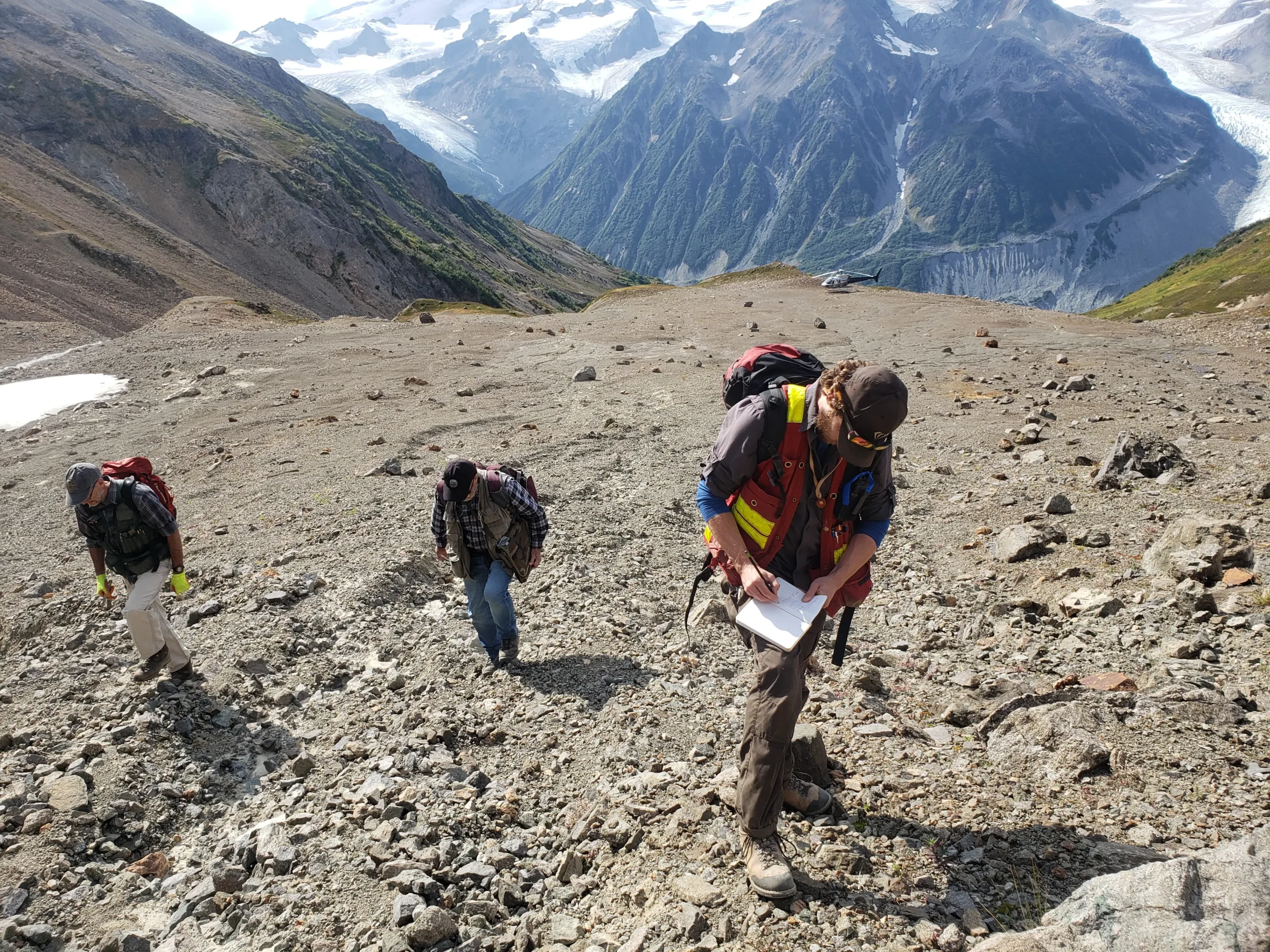
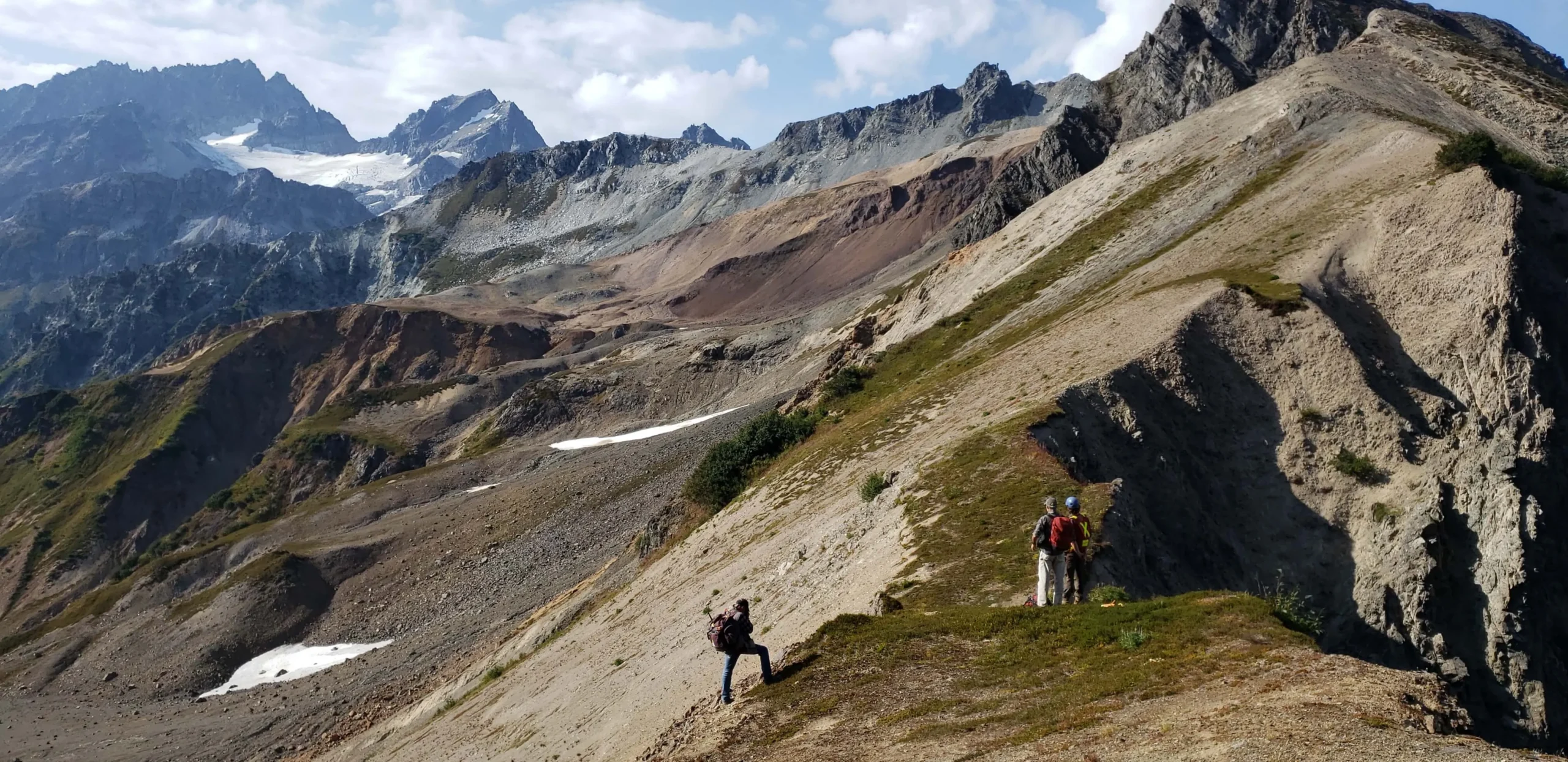
District-scale potential is supported by at least nine additional prospect areas with similar alteration and mineralization styles distributed over an approximately 12-kilometer strike length, most with little or no prior drilling. The best known are the Ellis Zone, Difficult Creek (DC), Milkbone, Kona, Easy Creek (EC), South Valley, and Double Glacier. Highlights include a 29.1 g/t Au boulder discovery at Easy Creek (2021), JT-style geophysical signatures under cover at South Valley near the potential future portal site, and abundant high-grade massive sulfide veins in equivalent host rocks at Double Glacier. The Ellis Zone sits within the Difficult Creek (DC) prospect area, four kilometers northeast of the JT Deposit, where large gossan alteration zones extend over a 1.5 km by 3.0 km area along a northeast-striking structure similar to the JT Deposit. Drilling in 2021 discovered near-surface bonanza-grade mineralization, returning 577.9 g/t Au and 2,023 g/t Ag over 6.40 m in hole DC21-010. Mineralization has since been defined over a 125-meter strike length, from surface to a depth of 225 meters, with an average true thickness of 10 to 15 meters in the plunging core of the zone.
Anaconda Minerals made the Johnson Tract drill discovery in 1982. Work from 1982 to 1995 included 88 drill holes totaling 26,840 meters and major engineering studies by Westmin Resources that evaluated direct shipping ore to their mill in British Columbia. That era prioritized engineering over exploration, leaving significant untested potential. The project reverted to CIRI in the late 1990s and saw no work until HighGold Mining leased it in 2019 and re-established its scale and grade. Contango acquired HighGold in July 2024 to advance the project within its DSO strategy.
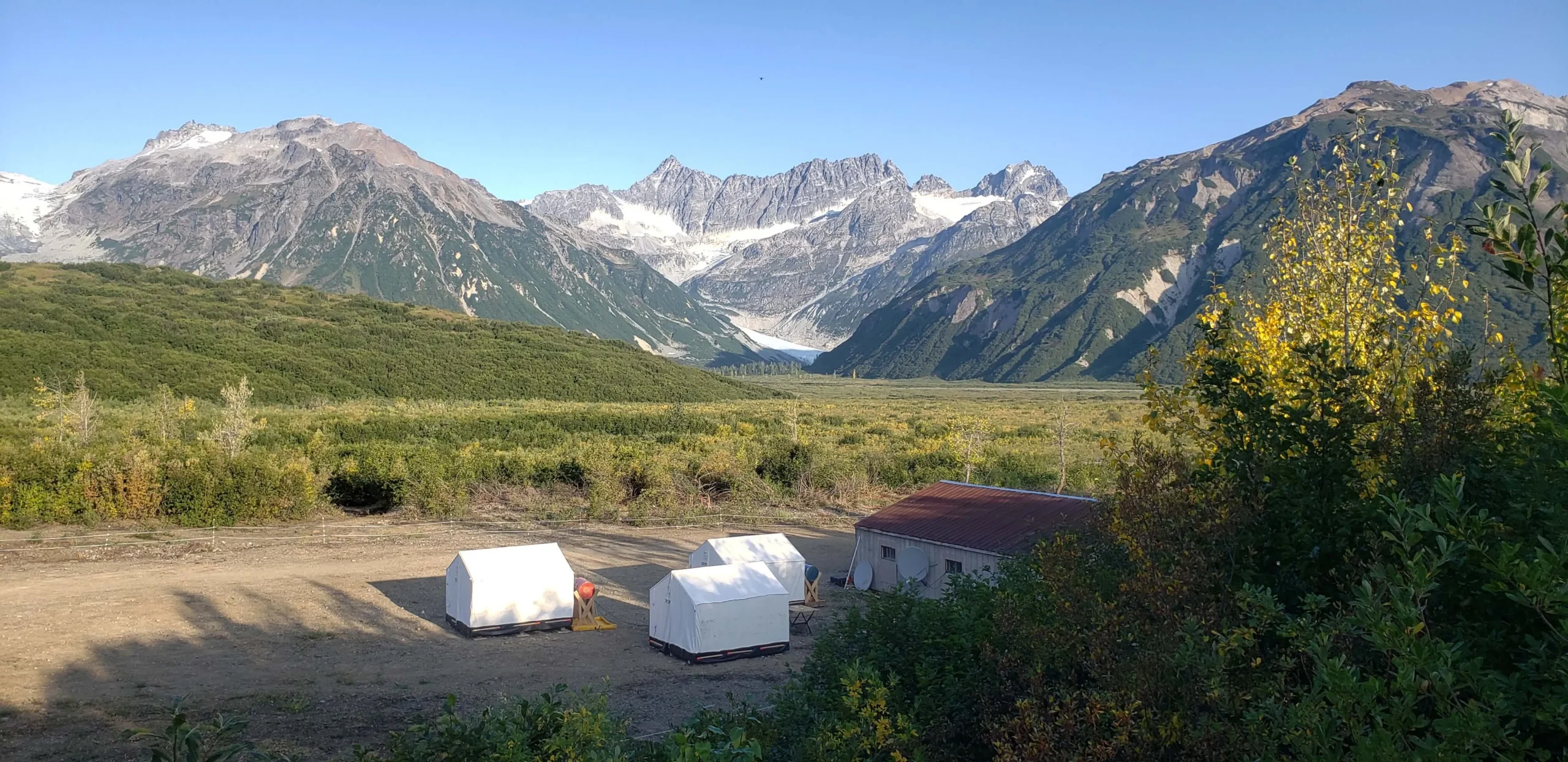
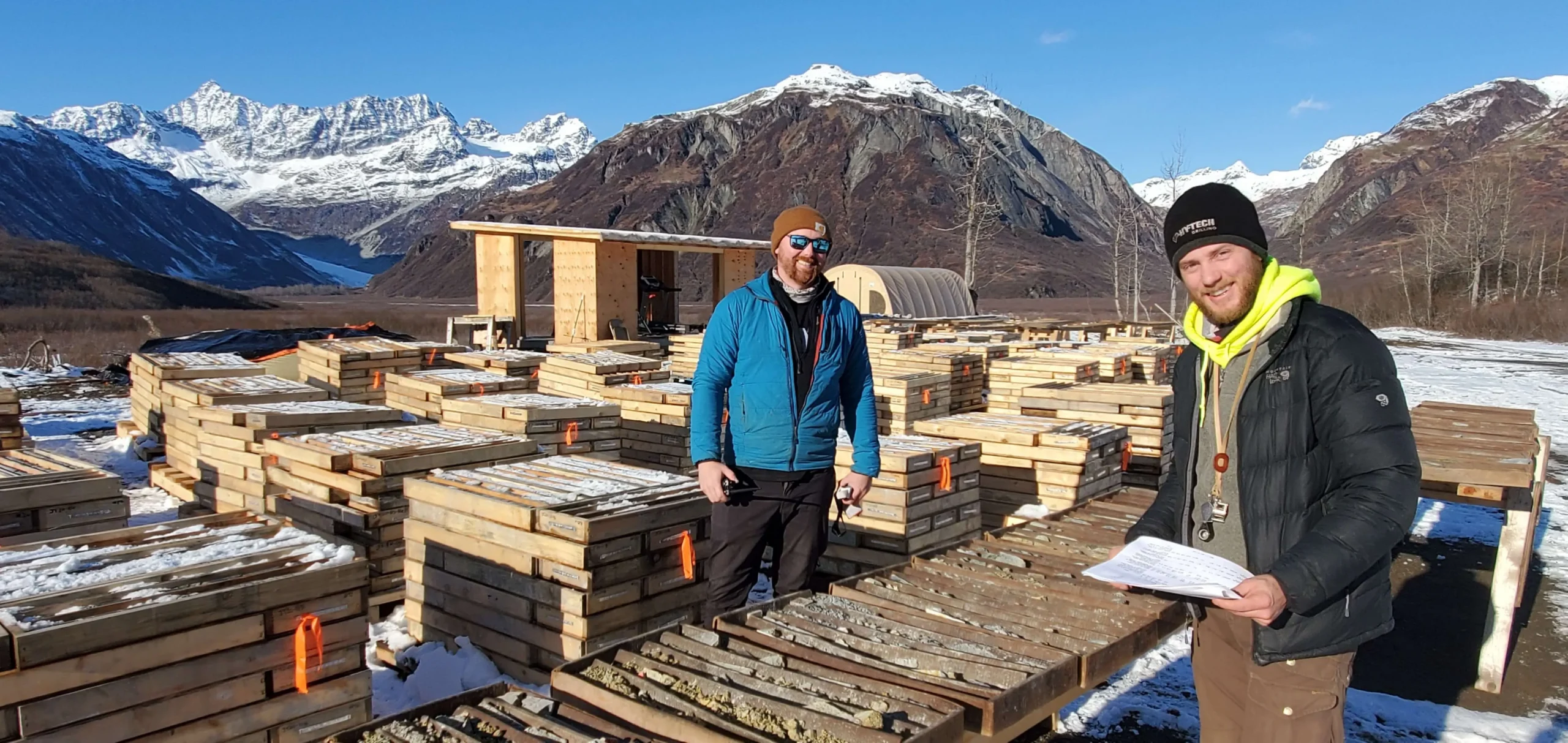
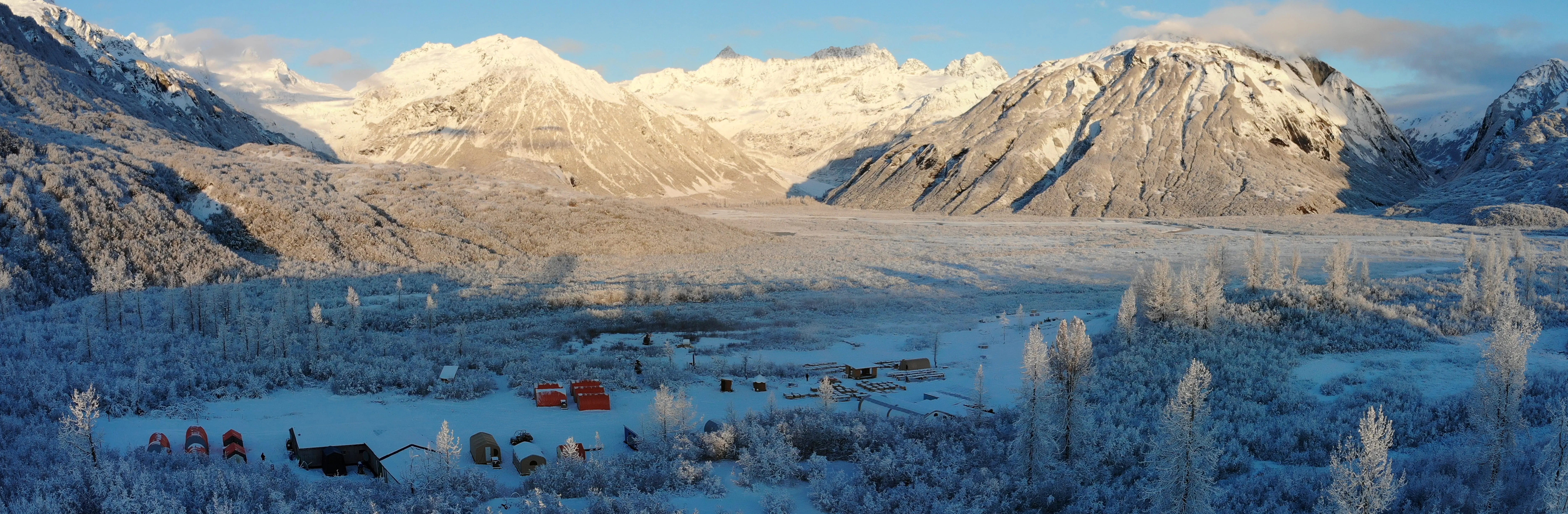
Contango is advancing the Johnson Tract Critical Metals project through permitting and pre-development. Johnson Tract is a FAST-41 covered project, a designation that provides transparency, coordination, and accountability amongst all the Federal agencies and project proponents. Active workstreams include baseline environmental studies, design and expansion of an existing airstrip capable of handling large equipment, winter camp upgrades, an underground access ramp to the base of the JT Deposit to expand and upgrade the resource, and a road to a barge landing site located ~20 miles away at the coast. With a high-grade resource that is open in multiple directions and standout metallurgy, the Company is assessing opportunities for near-term production under the DSO model, supported by the SK-1300 Initial Assessment completed in May 2025.